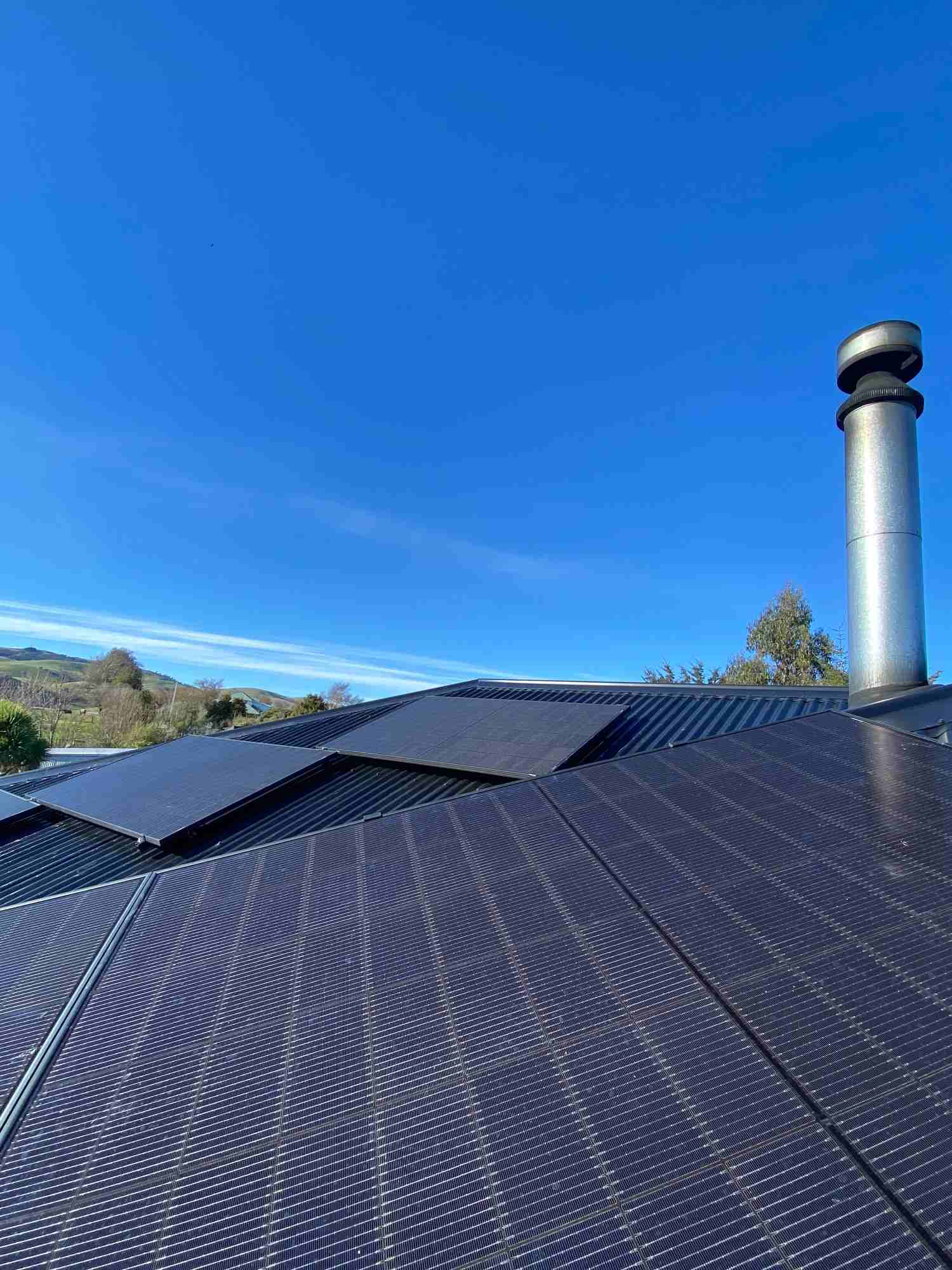


It depends on how much power you use, when you use it, and how much of your roof faces the right way. A house with someone home during the day justifies more home solar panels than one that only draws power at night.
The solar roof check tells you roughly how many panels your roof could physically take. What you should actually install comes out of your bills, and that needs a site visit.
Solar designed around your roof, your usage and your budget
Home solar panels turn daylight into electricity your house uses first, so you buy less from the grid. Anything you do not use is exported. Add a battery and the power your roof makes at midday is still there at 7pm, when most households use the most. We design, install and connect home solar across the Kāpiti Coast, Porirua, Wellington City and the Hutt Valley, and the same EWRB registered team does the quote and the install.
How we size a home system
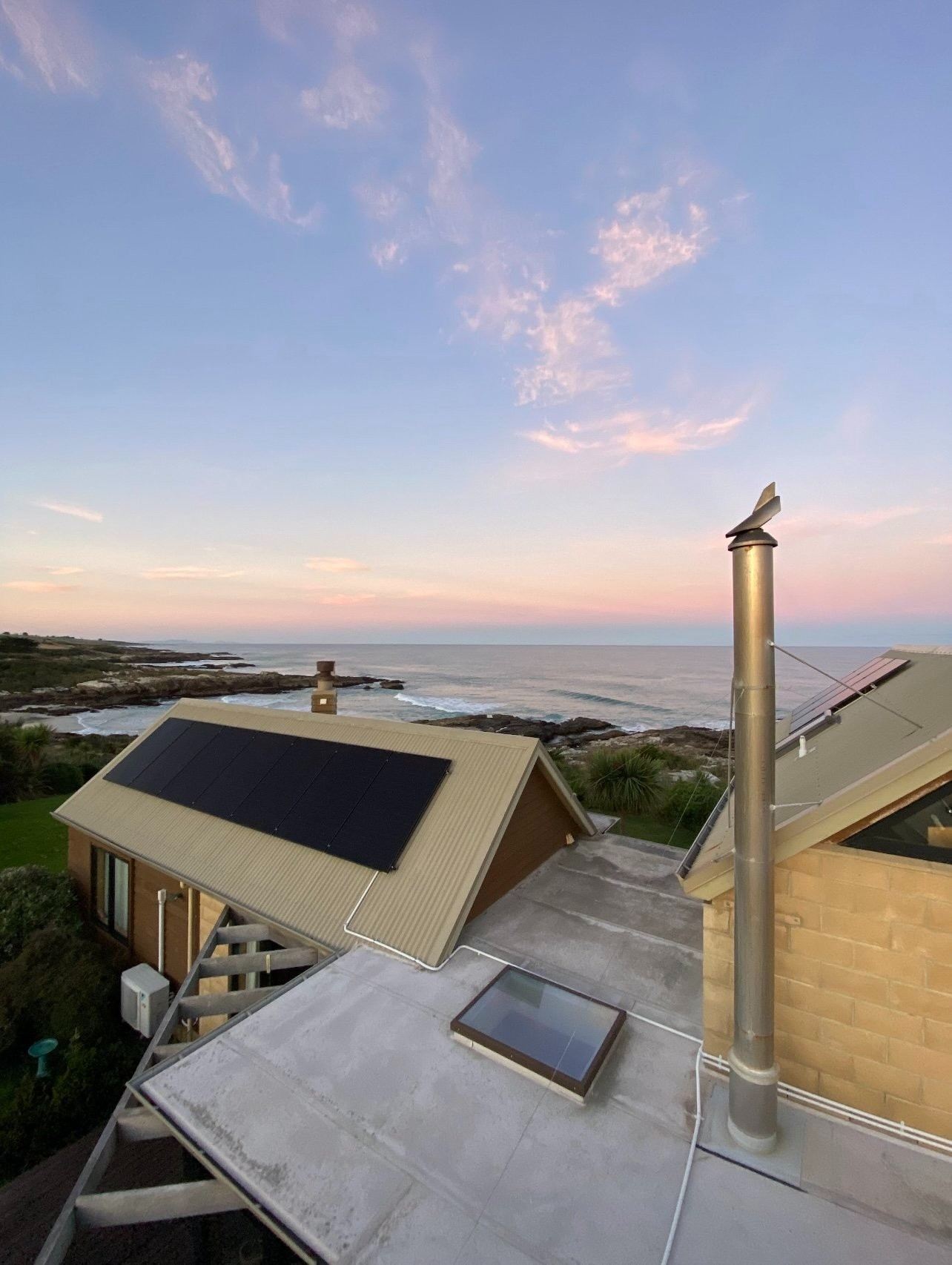
A home solar system is sized around how your household actually uses power, not off a price list. We start with twelve months of your bills and quote a system with the expected output and offset written down, so you can judge the payback for yourself. A site visit then confirms roof orientation, shading and structure before the design is locked in. Everything is installed by our own EWRB registered team to AS/NZS 5033 and AS/NZS 4777.
Benefits of going solar
-
 Power protection. With solar and battery storage your home stays lit through outages and blackouts, giving you real energy independence.
-
Home investment. Cut your power bills, increase your property value, and enjoy long-term savings that pay for themselves.
-
Sustainable power. Clean, renewable energy that reduces your carbon footprint and protects your family’s future.
What goes on your house
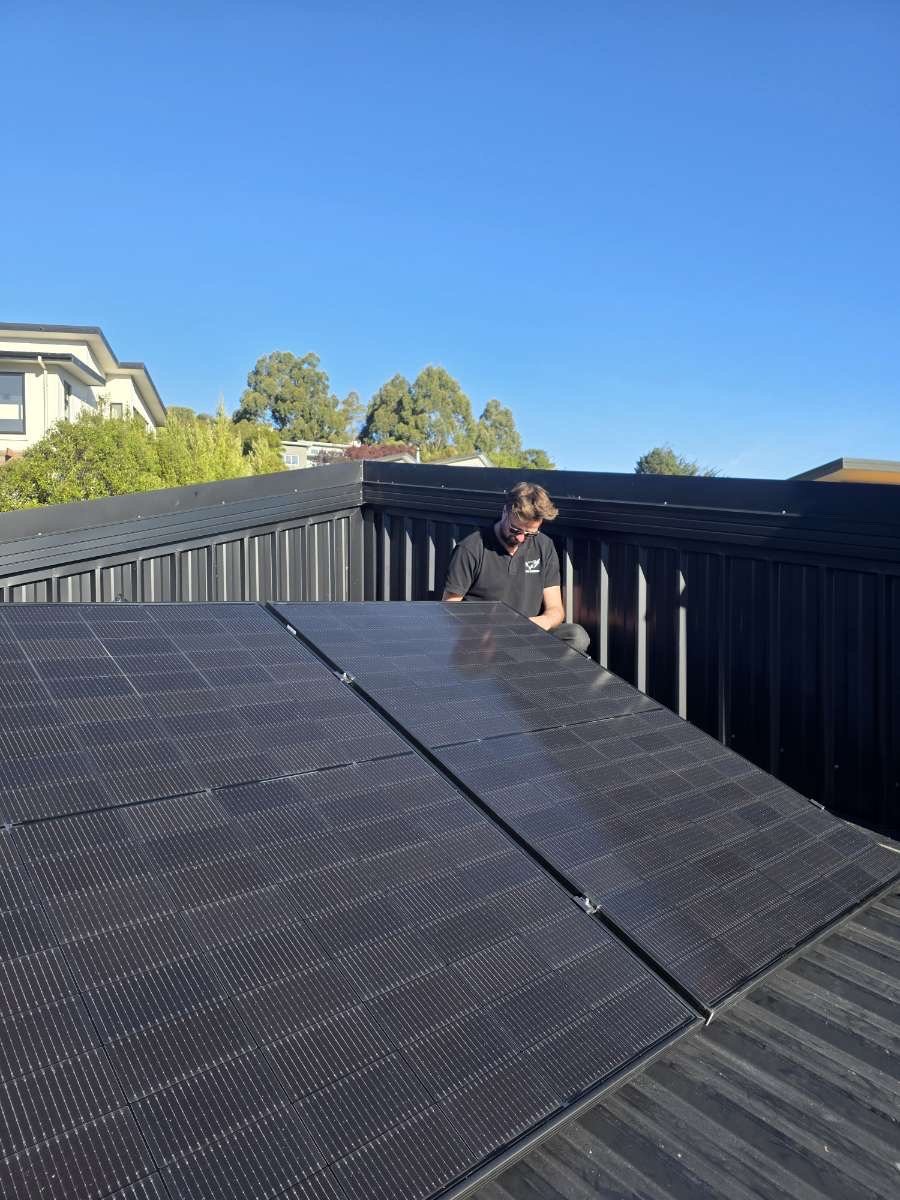
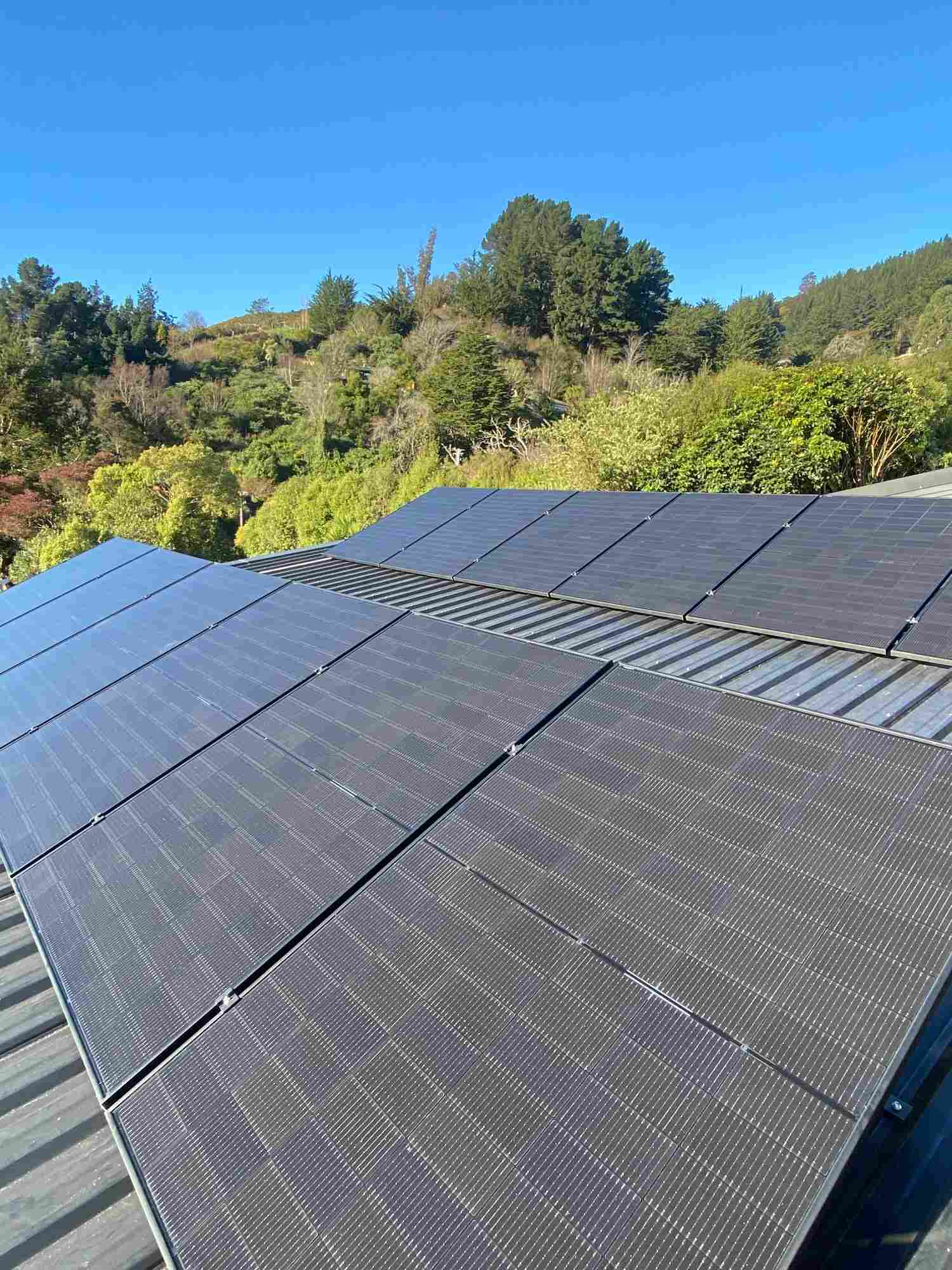
A home solar system is four things, plus storage if you want it.

Panels
Mounted on rails fixed into the roof structure, not the cladding. On a north-facing pitch they generate the most; east and west still work and simply produce more in the morning or the afternoon.

An inverter
Converts the panels’ DC output into the AC your house runs on. It is the part that does the most work, so it is the part worth spending on.

Switchboard and metering work
Isolation, protection and the connection to your board. Your meter also has to be able to measure export, and some older meters need replacing before a system can be switched on.
Monitoring
An app that shows what you are generating, using and exporting. We walk you through it at handover rather than leaving you to work it out.
Adding a battery
Most households add battery storage at the same time. Panels cut the daytime bill; the battery carries that generation into the evening, when a typical home uses the most power, and keeps the lights on when the network goes down. We will quote the system with and without a battery so you can see what the storage actually buys you before deciding.

Recent home installs
Every one of these was sized from the household’s own power use, not off a price list. We do the same work for businesses.
See all projectsWhitemans Valley
- System
- 16kW three-phase, 34 panels
- Inverter
- Sigenergy three-phase
- Location
- Whitemans Valley, Upper Hutt
A rural-edge home on a three-phase supply, so the generation is balanced across all three phases rather than pushed down one.
Read the Whitemans Valley projectPaekākāriki
- System
- 15.5kW, 35 panels
- Inverter
- Sigenergy
- Location
- Paekākāriki, Kāpiti Coast
A bush-edge section on the Kāpiti Coast, where the shading decides which roof planes are worth using and the coast decides the fixings.
Read the Paekākāriki projectWhat a home system costs to put in
We quote from your own power bills, not a price list. Four things move the number.
1
System size
How much power you use, and how much well-oriented roof you have to put panels on.
2
The roof itself
Pitch, cladding and access. A single-storey long-run roof is quicker than a steep tile roof.
3
Whether you add storage
Usually the biggest line in a quote. We price it both ways so you can compare.
4
Switchboard condition
Some boards need upgrading first. We check at the site visit so it lands in the quote.
Want a rough idea before you call?
The roof check emails you your roof’s size, orientation and sun hours. A guide, not a quote.
Low-interest green loans
Most major banks lend for solar at a reduced rate, as a top-up on a home loan you already have with them. Westpac’s Greater Choices is 0% for five years up to $50,000 NZD. ANZ, ASB and BNZ are 1% for three years up to $80,000 NZD. Kiwibank’s sustainable offer is a cashback rather than a discounted rate.
The discount runs for that fixed term, then the balance moves to the bank’s normal rate, so it takes the sting out of getting started rather than out of the whole loan. Some lenders also require a SEANZ member to do the install, which we are. Rates and conditions change often, so confirm the current offer with your bank.
Rates as published by EECA, checked 26 September 2026.
- ANZ
- ASB
- BNZ
- Kiwibank
- Westpac
Our solar panel installation process
Six stages, one team. This is exactly what happens between the first conversation and switch-on.
-
Design
We design a system around your home, your roof and what you want out of it, including battery storage if that is part of the plan.
-
Within budget
We refine the design and the pricing until it fits your budget. Honest advice and no pressure, and if a smaller system is the better buy we will tell you so.
-
Site visit
Once the numbers work we come out to confirm the roof, the shading, the structure and the switchboard, and finalise the design.
-
Go-ahead
You give the go-ahead and we lock in the plan and the timeline. We lodge your grid-connection application with the lines company and clear any council or compliance approvals, so it is all done before we are on site.
-
Installation
Our own EWRB registered Wellington team does the install: racking, wiring, panels and inverter, to AS/NZS 5033 and AS/NZS 4777. No subcontractors turning up that you have never spoken to.
-
Inspection and switch-on
The system is inspected and signed off to New Zealand standards, your certificate of compliance is issued and the grid connection is finalised. We walk you through the monitoring, hand over the warranties and documentation, and stay available afterwards.
Start with a free quote. Call 021 0914 5069.
Home solar questions
Still have a question?
Send us twelve months of power bills and we will tell you what a system would realistically offset on your house.
-
How many panels will my house need?
-
Can I put solar on a flat roof?Yes, and there are two ways to get the output you need from one.
Mount the panels on extendable leg kits. That lifts the pitch to as much as 45 degrees, so the array is angled at the sun rather than lying flat.
Or keep them flush with the roof and fit more of them. If how the house looks matters more than the tilt, the extra panels make up the difference and the array stays out of sight from the ground.
Which way suits comes down to how much roof you have and how visible it is. We price both. -
Will solar keep my power on in an outage?Not on its own. A grid-connected system without storage must shut down when the network does, so it cannot feed electricity into lines someone may be working on. That is a safety rule under AS/NZS 4777, not a fault.
A battery with backup changes that: it disconnects from the grid and keeps nominated circuits running. Say early if outages matter to you, because it shapes the design rather than being bolted on at the end. -
Do I need a battery, or is solar worth it without one?A battery does two things: it shifts your daytime generation into the evening, and it keeps the house running through an outage. It is also the most expensive part of a system.
If blackout protection is not a must-have, oversizing is often better value. You fit extra panels so the system generates more across the year, and the credits from what you export help cover the power you buy back after dark. Buy-back rates are lower than what you pay to import, so the aim is to export enough during the day to pay for the evening.
Panels cost far less per kilowatt than storage, so this stacks up well for homes that use little power at night, and for businesses that mostly run during the day. The trade-off is simple: no battery, no blackout protection. We quote both ways. -
Does solar actually work in Wellington weather?Yes. Panels run on light rather than heat and still generate on an overcast day, just less. Cool bright conditions suit them, because output drops as panels get hot. We set out the measured figures in how much sun Wellington gets for solar.
Wind and salt matter more here than cloud, and both are an installation question: fixings into the structure, rail spacing and corrosion-appropriate hardware. More in building consent for solar panels in Wellington. -
What maintenance do solar panels need?Very little. No moving parts, and rain does most of the cleaning on a pitched roof. Glance at the monitoring app now and then, because a drop in output is the first sign something needs looking at.
Inverters are the part most likely to need attention over a system’s life. Warranty terms differ by manufacturer and product, so your quote sets out the specific warranties for the equipment proposed.
Where we install
We are based in Paraparaumu and install home solar and battery systems across the Wellington region, from the Kāpiti Coast through Porirua and Wellington City to the Hutt Valley.
Kāpiti Coast
- Ōtaki
- Waikanae
- Paraparaumu
- Raumati
- Paekākāriki
Porirua
- Pukerua Bay
- Plimmerton
- Porirua
- Whitby
Wellington City
- Tawa
- Johnsonville
- Wellington Central
- Karori
Hutt Valley
- Lower Hutt
- Upper Hutt
- Petone
- Wainuiomata
- Eastbourne
What our customers say
Reviews left on Google by Weka Solar customers.
-
We had already obtained other quotes from major well known companies that advertise extensively. Alex was excellent. He quoted multiple different options and talked them all through to give us the best outcome. His organising, communication, response times and updates on progress were exceptional. His teams’ quality of work and clean up on site were also excellent.
-
The guys did a fabulous job of installing a new solar, battery and EV charging system. The install is tidy and looks good. Alex is responsive to emails and calls which was appreciated. I’d recommend Weka Solar for anyone looking at solar.
-
Great advice and service from Alex and the team at Weka Solar, I highly recommend them if you are considering solar installations.
Find out how much you could save
Fill out a few details and we will be in touch with a free quote.